Fully‑Welded Ball Valve for Gas & District Heating
 | Fully‑Welded Ball Valve for Gas & District Heating
|
Fully‑Welded Ball Valve for Gas & District Heating:
Fully‑welded ball valves, thanks to their monolithic welded body construction, have become mainstream shut‑off components for urban district heating networks and long‑distance natural gas pipelines, performing reliably under demanding long‑term service for both buried installation and above‑ground pipe gallery projects.
Application Scope
This valve series serves urban heating systems, thermal power pipelines, water & steam supply, oil & gas, petrochemical and pharmaceutical process piping as on‑off control devices. Its pressure‑containing body is fully welded from high‑strength carbon‑steel seamless pipe or pressed steel plate. Floating ball and fixed ball versions are both available. Single‑seal or double‑seal multi‑stage seat structures deliver bubble‑tight shut‑off for consistent long‑term operation.
Core Structure & Material Properties
The valve body adopts high‑strength carbon steel matching connected pipeline material, eliminating uneven stress distribution caused by material mismatch. It resists local deformation triggered by seismic activity or traffic‑induced ground disturbance and delivers outstanding ageing resistance. Apart from standard butt‑weld ends, flange connections and other end types can be supplied upon project requirements.
Stem material is high‑performance stainless steel for superior corrosion resistance. Sealing sets adopt FPM fluororubber and carbon‑filled PTFE (PTFE+C), balancing high‑temperature resistance, pressure endurance and media compatibility. Ball elements are precision‑CNC machined with computer‑aided inspection throughout manufacturing, delivering smooth operation without jamming or mechanical interferance。
A blow‑out‑proof stem structure prevents stem ejection under abnormal internal pressure. Final assembly is completed inside constant‑temperature workshops to minimize seal assembly deviation caused by temperature fluctuation and stabilize batch‑to‑batch quality. Compared with competing products of equal size, it features compact body dimension and streamlined appearance. Under rated working conditions, its design service life exceeds 20 years.
Key Technical Specifications
Design Standards
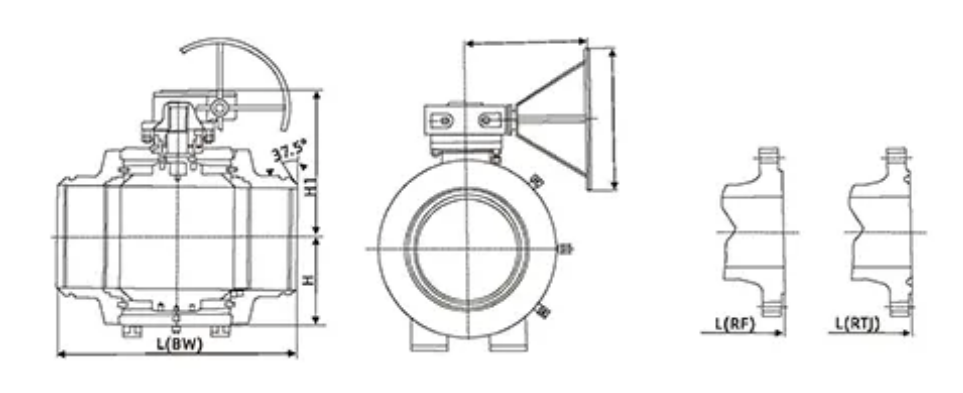
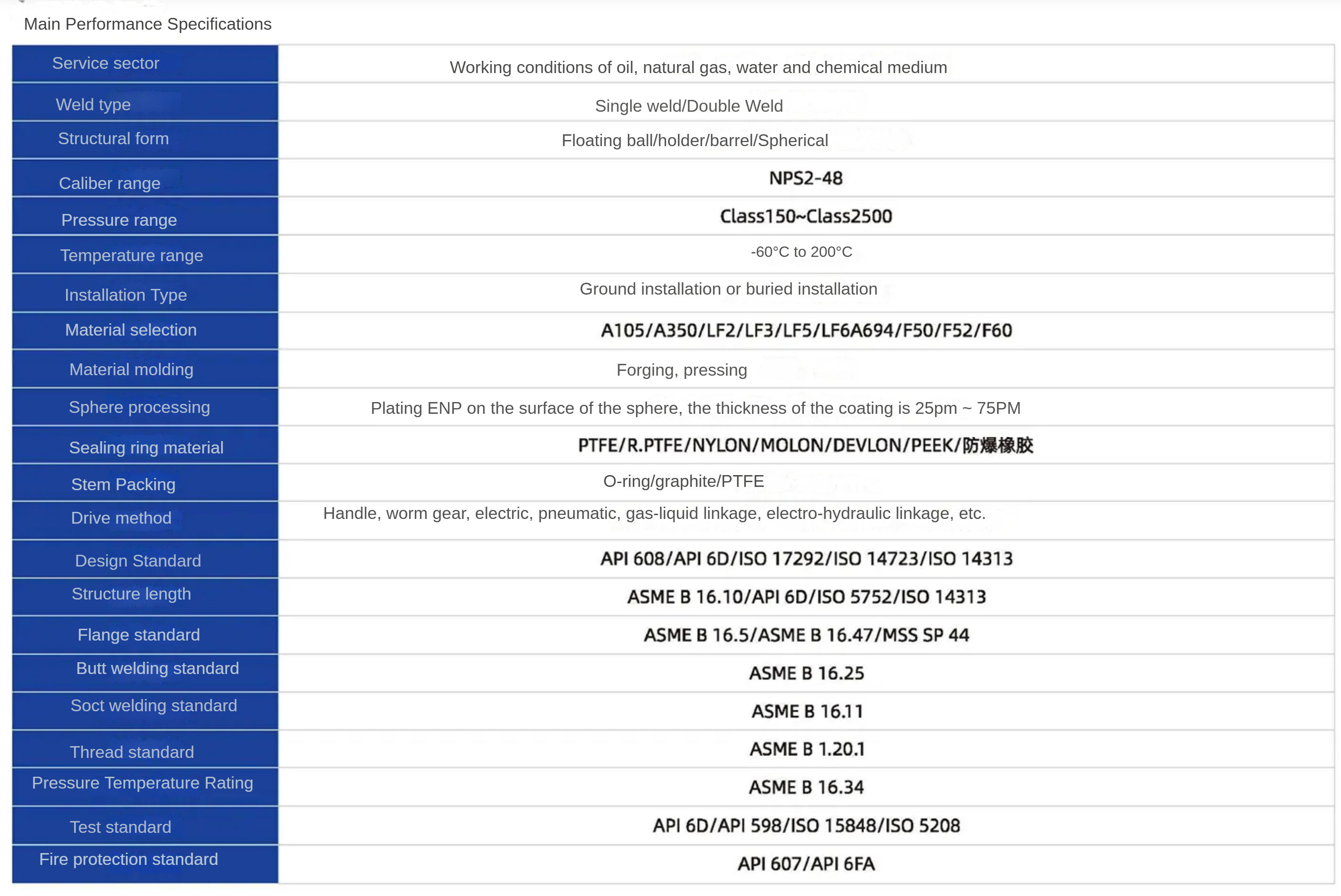
Design, manufacturing and testing comply with API 6D, API 608, ISO 17292. Fire‑safe performance meets API 607 / API 6FA. Body face‑to‑face, flange and butt‑weld end dimensions follow ASME B16.10, ASME B16.25 and other international codes.
Application Scope
This valve series serves urban heating systems, thermal power pipelines, water & steam supply, oil & gas, petrochemical and pharmaceutical process piping as on‑off control devices. Its pressure‑containing body is fully welded from high‑strength carbon‑steel seamless pipe or pressed steel plate. Floating ball and fixed ball versions are both available. Single‑seal or double‑seal multi‑stage seat structures deliver bubble‑tight shut‑off for consistent long‑term operation.
Core Structure & Material Properties
The valve body adopts high‑strength carbon steel matching connected pipeline material, eliminating uneven stress distribution caused by material mismatch. It resists local deformation triggered by seismic activity or traffic‑induced ground disturbance and delivers outstanding ageing resistance. Apart from standard butt‑weld ends, flange connections and other end types can be supplied upon project requirements.
Stem material is high‑performance stainless steel for superior corrosion resistance. Sealing sets adopt FPM fluororubber and carbon‑filled PTFE (PTFE+C), balancing high‑temperature resistance, pressure endurance and media compatibility. Ball elements are precision‑CNC machined with computer‑aided inspection throughout manufacturing, delivering smooth operation without jamming or mechanical interferance。
A blow‑out‑proof stem structure prevents stem ejection under abnormal internal pressure. Final assembly is completed inside constant‑temperature workshops to minimize seal assembly deviation caused by temperature fluctuation and stabilize batch‑to‑batch quality. Compared with competing products of equal size, it features compact body dimension and streamlined appearance. Under rated working conditions, its design service life exceeds 20 years.
Key Technical Specifications
Design Standards
Design, manufacturing and testing comply with API 6D, API 608, ISO 17292. Fire‑safe performance meets API 607 / API 6FA. Body face‑to‑face, flange and butt‑weld end dimensions follow ASME B16.10, ASME B16.25 and other international codes.
Working Condition Limits
• Drive options:lever, worm‑gear, electric, pneumatic, electro‑hydraulic linkage
• Size range: NPS2‑48(DN50‑DN1200)
• Pressure class: Class150‑Class2500 / PN1.6~PN25.0
• Operating temperature: ‑60℃ ~ 200℃
• Installation: above‑ground or direct buried
• Drive options:lever, worm‑gear, electric, pneumatic, electro‑hydraulic linkage
• Size range: NPS2‑48(DN50‑DN1200)
• Pressure class: Class150‑Class2500 / PN1.6~PN25.0
• Operating temperature: ‑60℃ ~ 200℃
• Installation: above‑ground or direct buried
Selection Tips for Different Installation
Buried Gas & Heating Pipeline
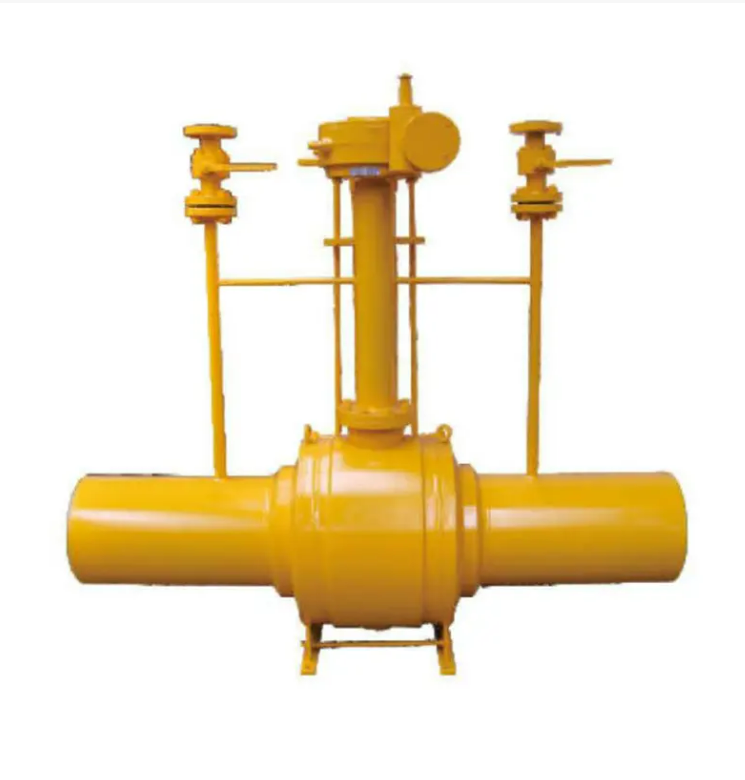
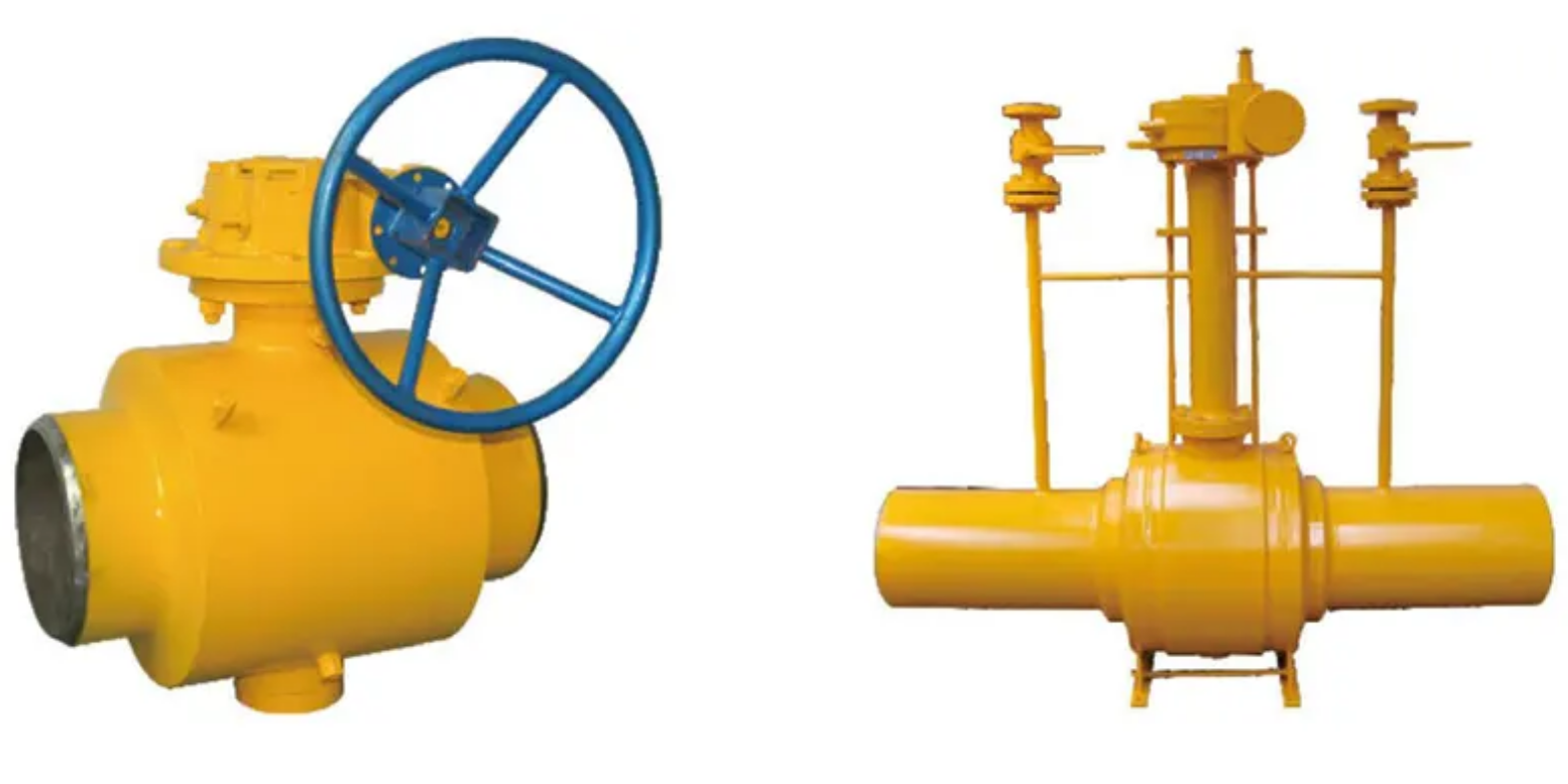
For buried gas or heating pipelines, select fully‑welded ball valve with extension stem to remove the need for valve chambers and cut civil‑construction costs. The all‑welded body eliminates external flange leakage points and maintains reliability amid soil moisture and ground displacement.
For buried gas or heating pipelines, select fully‑welded ball valve with extension stem to remove the need for valve chambers and cut civil‑construction costs. The all‑welded body eliminates external flange leakage points and maintains reliability amid soil moisture and ground displacement.
Above‑Ground Pipe Gallery。
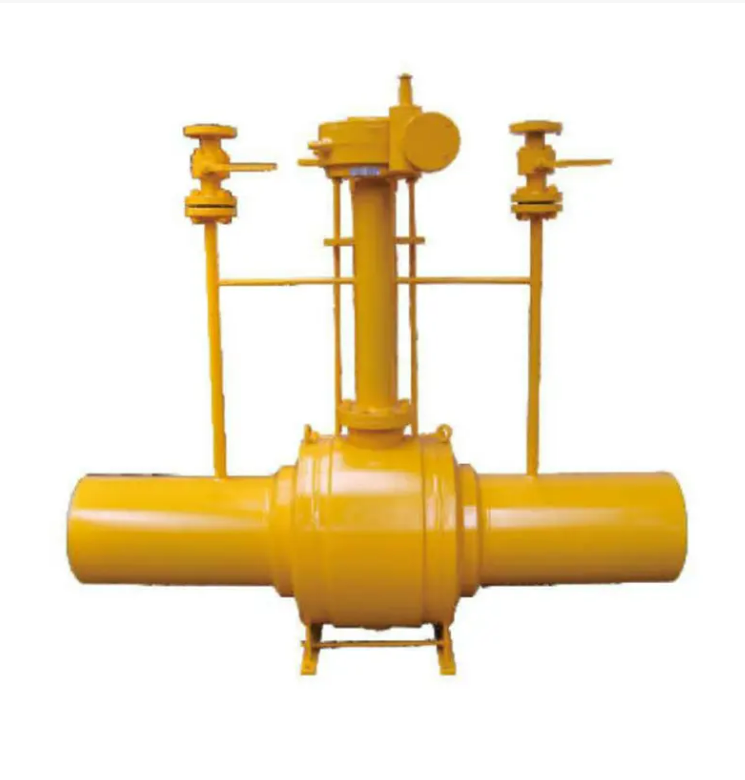
For above‑ground pipe gallery installation, worm‑gear or electric actuators are preferred for large bore sizes, supporting on‑site manual operation and routine inspection.
Petrochemical & Pharmaceutical Process Lines
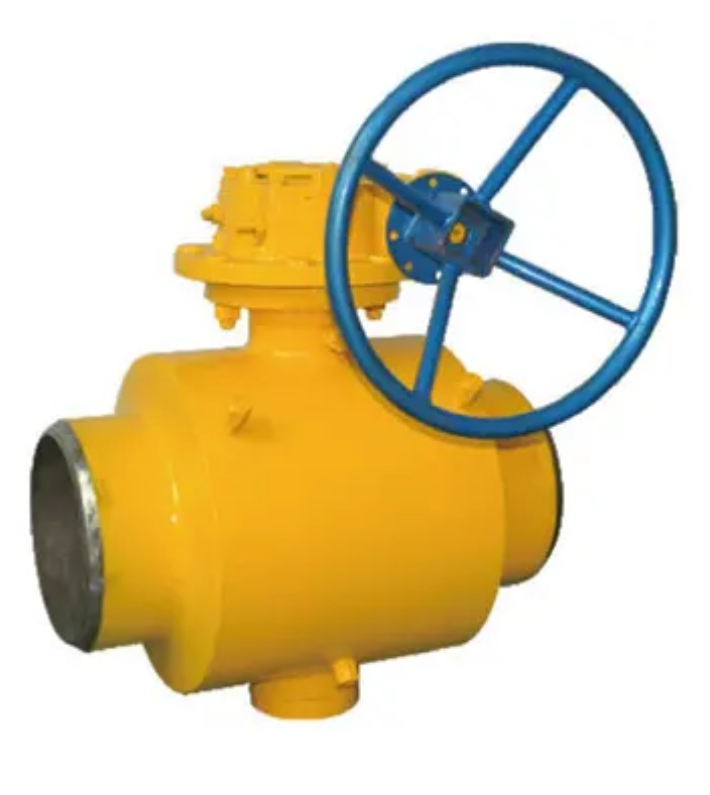
For petrochemical and pharmaceutical process lines, verify ball plating and seat material against medium corrosion, double‑check temperature‑pressure ratings and comply with project‑specified test and fire‑safe standards.
Procurement & Engineering Pitfalls
1.Do not substitute split‑body ball valves for buried fully‑welded units; buried flange joints of split‑type valves are highly vulnerable to external corrosion and leakage.
2.Verify the full material package including body, ball plating and seals. Qualified body material alone cannot guarantee service life if ball coating or seat material is incompatible.
3.For buried applications, confirm extension stem length against actual soil cover depth to prevent operating position being buried underground.
4.Constant‑temperature assembly, ENP plating and API 6D factory acceptance test shall be specified within technical purchase agreements.