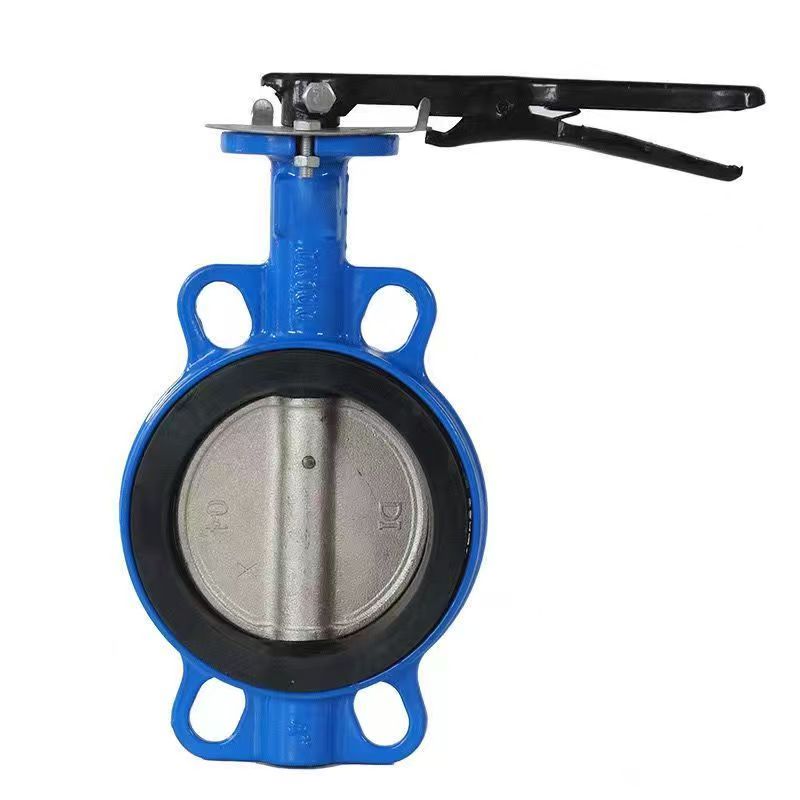
Italian Style Wafer Thin Ball Valve
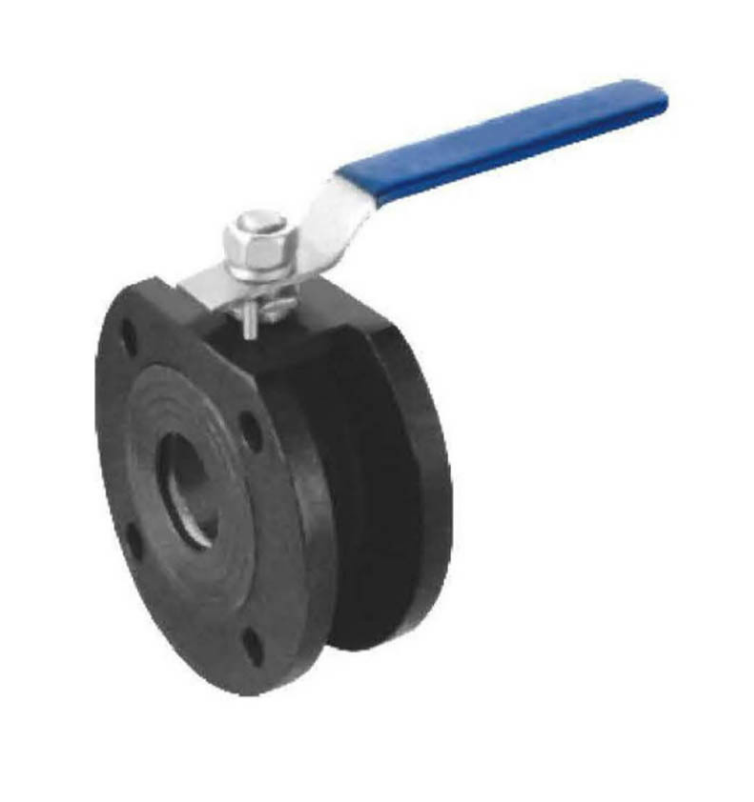
 | Italian Style Wafer Thin Ball Valve
|
Italian Style Wafer Thin Ball Valve:
Standard flanged ball valves demand ample axial installation space, which frequently causes layout obstacles inside heat exchangers, compact skid units and narrow pipeline interlayers. Italian style wafer thin ball valves adopt flangeless thin single-piece body construction, clamped directly between two pipeline flanges, drastically cutting axial space occupied by the valve. The streamlined disc-shaped profile abandons conventional long cast body design; compared with flanged ball valves of identical nominal diameter, overall weight drops by over 40%, making this compact configuration an irreplaceable option for thermal equipment requiring lightweight layout.
Installation Characteristics & Piping Matching Rules
The valve comes without integrated flanges and works purely as a wafer sandwiched between a pair of standard pipe flanges. Installers do not need separate gaskets for the valve body, as sealing relies on existing pipeline gaskets, yet strict tolerances are required for flange parallelism and bolt length. Unlike screwed ball valves that support free orientation mounting, thin wafer ball valves cannot bear pipeline dead weight. Additional pipe supports are mandatory on long piping runs to avoid body deformation and leakage induced by sustained load stress. Most projects adopt PN16 standard flange matching, compatible with mainstream specifications JB/T79, HG/T20592 and ASME B16.5 Class150.
Material Selection & Working Parameter Range
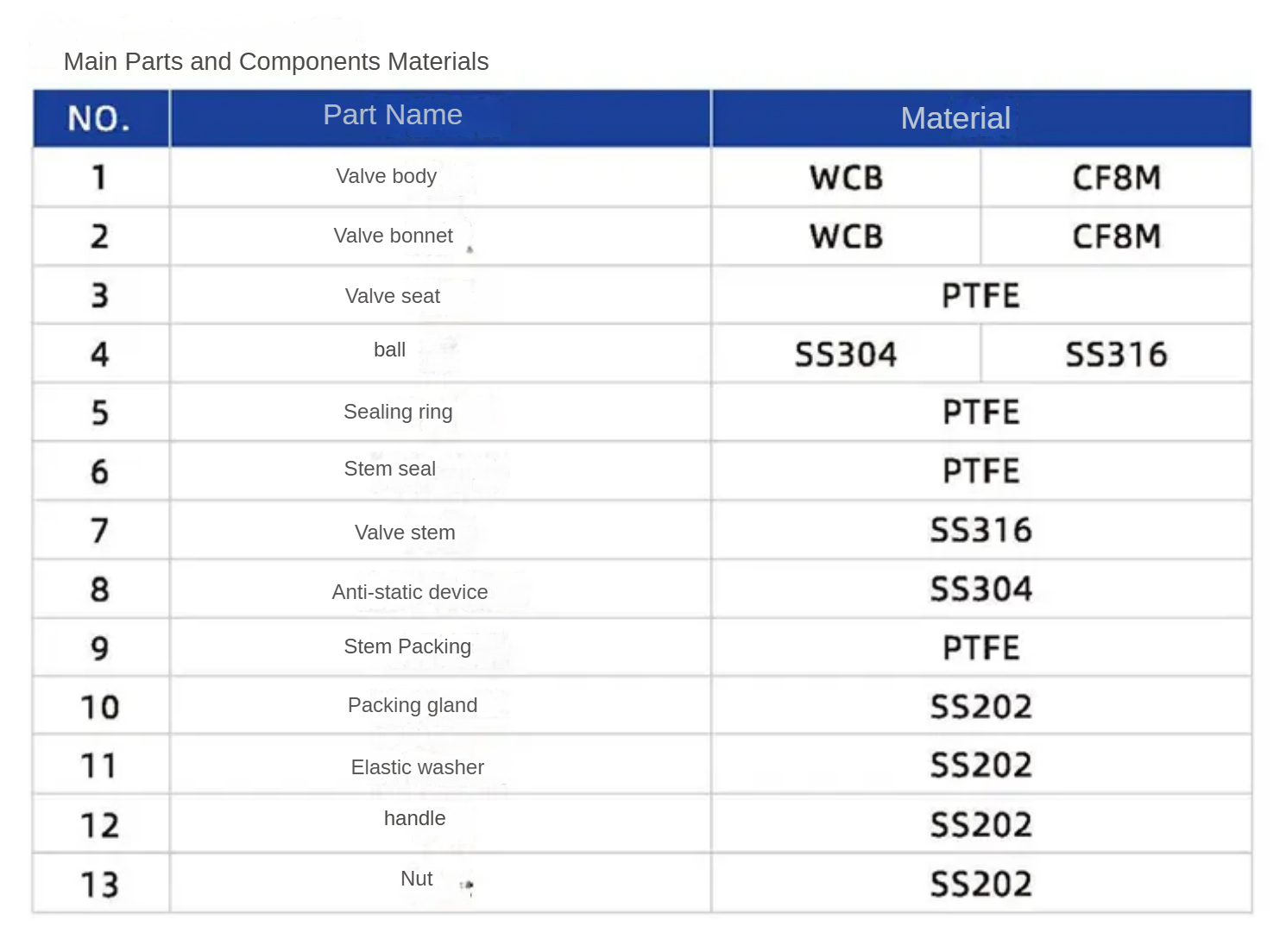
Two mainstream body material grades are available: WCB carbon steel and CF8 stainless steel. Carbon steel variants are widely deployed for saturated steam, heat transfer oil and ambient fuel oil pipelines, while stainless steel models suit clean water and mildly corrosive chemical media. Built-in anti-blowout stem structure matches PTFE valve seats, supporting continuous operation from -20℃ to 180℃ under nominal pressure PN16. The full-port flow bore minimizes fluid resistance to eliminate unnecessary pumping energy loss. Many European HVAC contractors prefer this compact wafer design for compact heat exchange modules.
Key Advantages
Extreme compactness stands out as its most competitive merit, delivering prominent advantages for densely packed internal piping and renovation projects with limited installation space. Simplified body structure with fewer components brings lower procurement cost versus same-size flanged ball valves. Disassembly and service do not require cutting long pipeline sections; the valve can be extracted simply by loosening flange bolts, effectively shortening overhaul cycles of heat exchange equipment.
Application Restrictions
Since all clamping force originates from external pipe flanges, suspended standalone installation is strictly prohibited. It is not recommended for long-distance outdoor pipelines subject to intense continuous vibration, as sustained shaking may loosen clamping bolts and trigger external leakage. Restricted by thin cavity construction, this design fits only medium-low pressure clean media and should not be deployed for fluid carrying abrasive solid particles. Besides, it cannot satisfy stringent bi-directional high differential pressure sealing demands; fixed flanged ball valves remain the priority choice for high delta-P pipelines.
Typical Industrial Application Scenarios
Inlet and outlet isolation for plate heat exchangers, compact thermal oil circulation units, HVAC hot & cold exchange systems, integrated pipelines of water purification equipment and auxiliary piping for miniature reactors represent the most concentrated application scenarios for Italian style wafer thin ball valves. Its slim thickness fits perfectly inside all types of skid-mounted thermal and water treatment integrated machinery, and it is widely selected as a replacement valve for pipeline renovation projects in aging factories.