Stainless Steel Three Piece Female Thread Ball Valve
 | Stainless Steel Three Piece Female Thread Ball Valve
|
Stainless Steel Three Piece Female Thread Ball Valve :
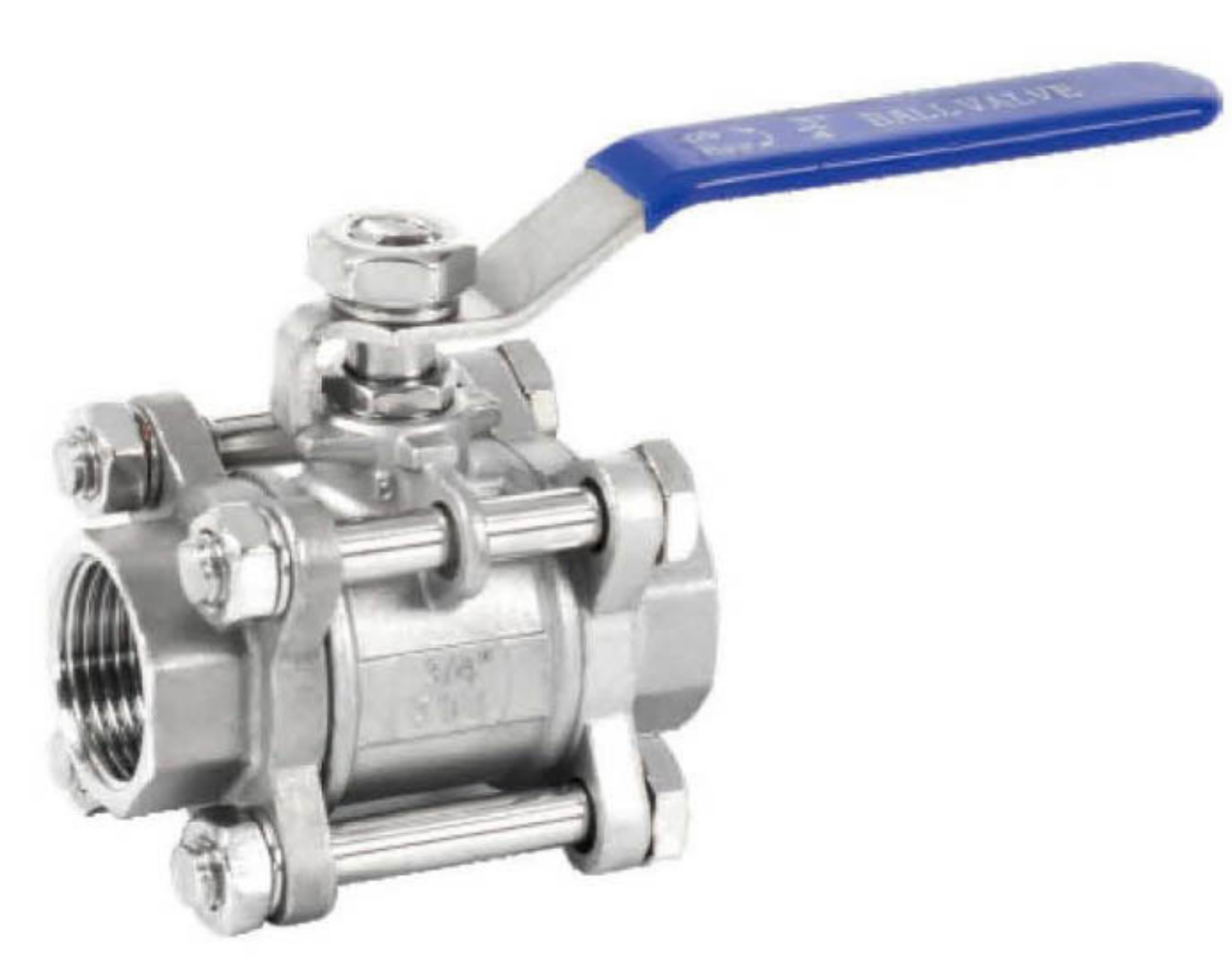
Three-Piece Detachable Body Construction
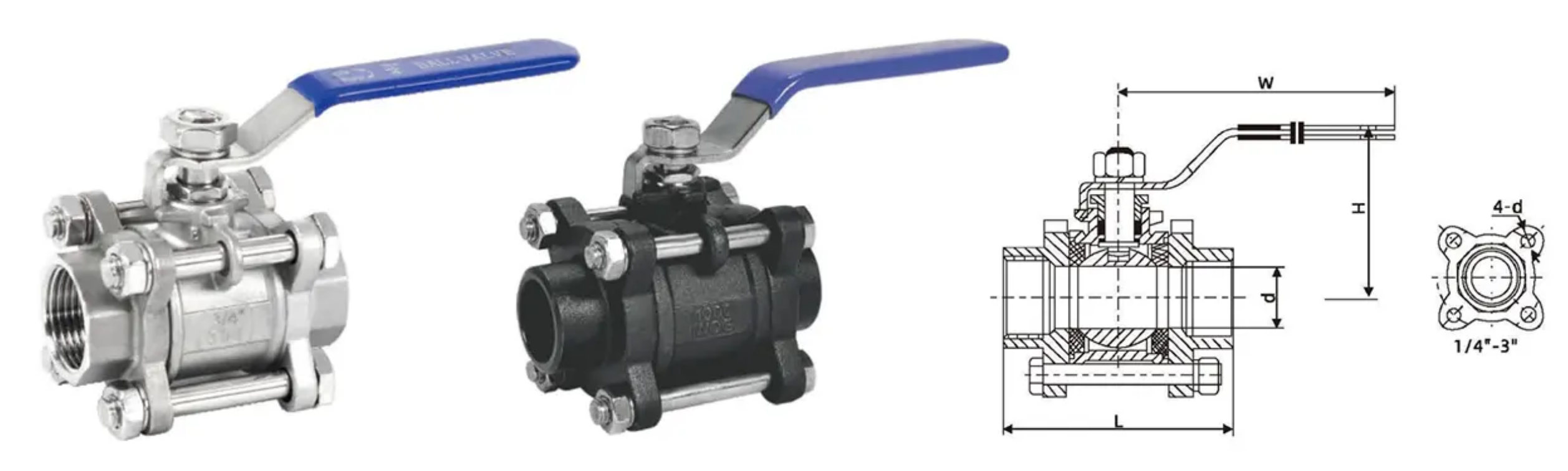
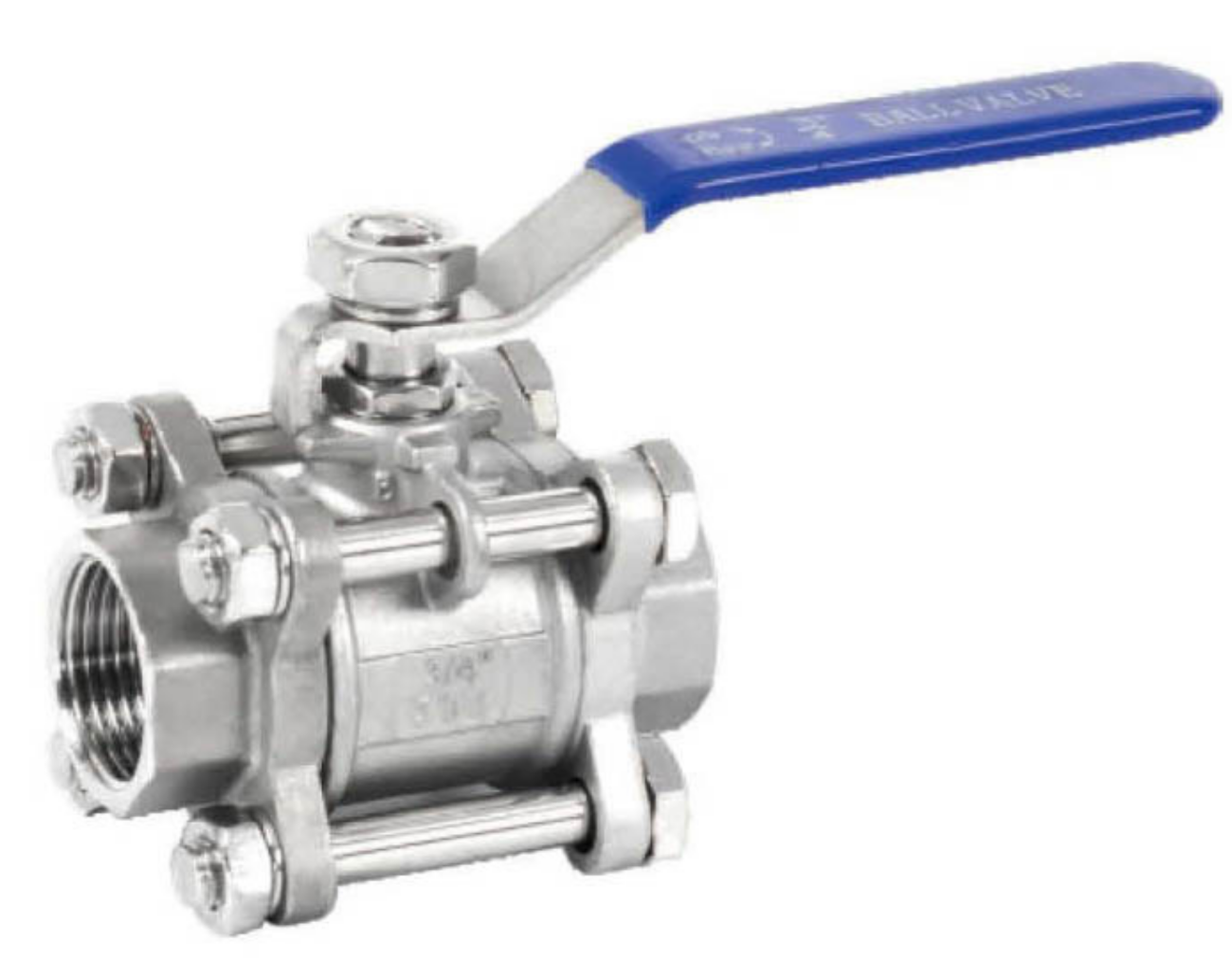
One-piece and two-piece screwed ball valves demand full removal from pipelines for overhaul once sealing components wear and leak, while three-piece bodies, assembled by two end bonnets and a central main body secured with four long stainless steel bolts, allow cavity separation after loosening external fasteners, enabling replacement of wear-prone balls and seats without complete pipeline disconnection. Another unignorable merit brought by split construction lies in partial component replacement: if one single shell segment suffers corrosion or impact damage, only the faulty section needs swapping rather than scrapping the entire valve, slashing spare part expenditure and downtime for air compressors and mini chemical circulation units running nonstop all year round.
Dual Material Options & Corrosion Matching Logic
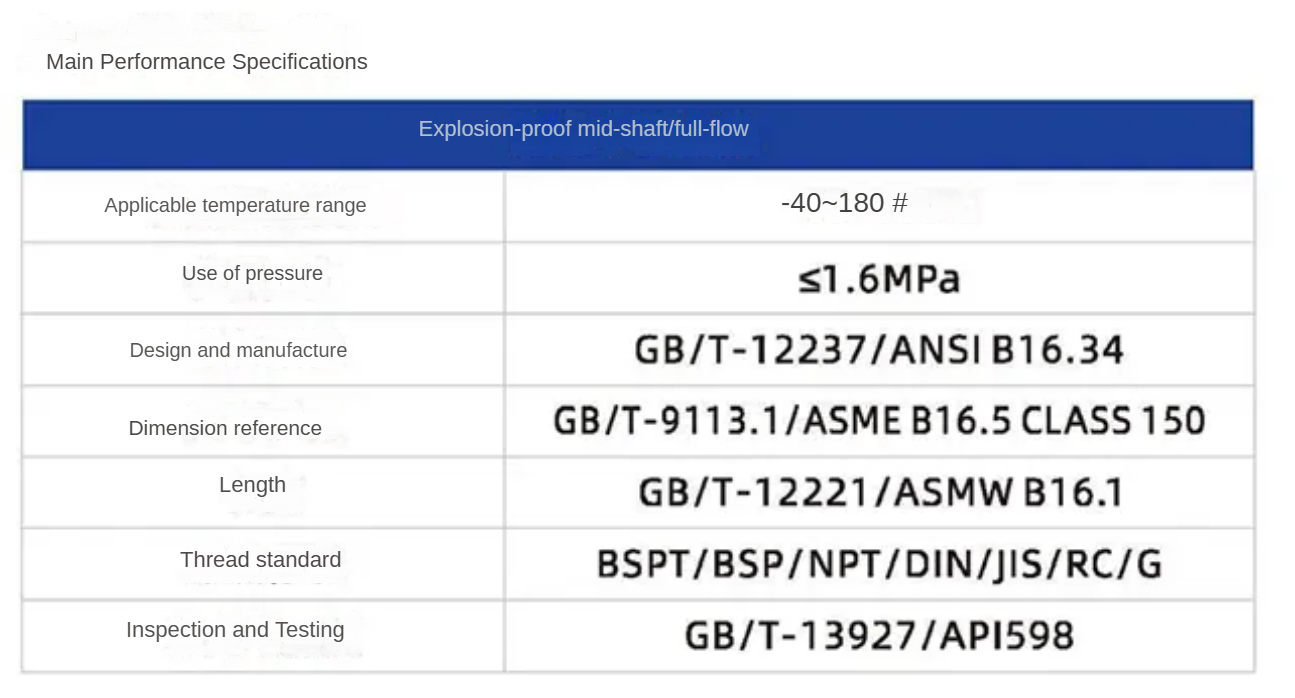
Two mainstream shell material variants are displayed side by side on product photos: SS304 stainless steel type suits clean water, compressed air and non-corrosive light fuel oils, with mirror polished surface restraining attachment of medium impurities and rust formation; black coated WCB carbon steel version is widely adopted for dry ambient gas and general industrial water circulation pipelines, delivering more competitive unit procurement prices. SS304 stainless steel serves as standard material for solid balls and valve stems, while modified RPTFE is uniformly used for seats, middle gaskets and stem seals. Its low friction coefficient ensures smooth 90° switching, avoiding rapid hardening failure during alternating hot and cold cycles from -40℃ to 180℃. An anti-blowout limit shoulder is integrated at stem bottom to eliminate stem ejection and medium spray leakage under high-pressure surges.
Universal Global Thread Standard Compatibility
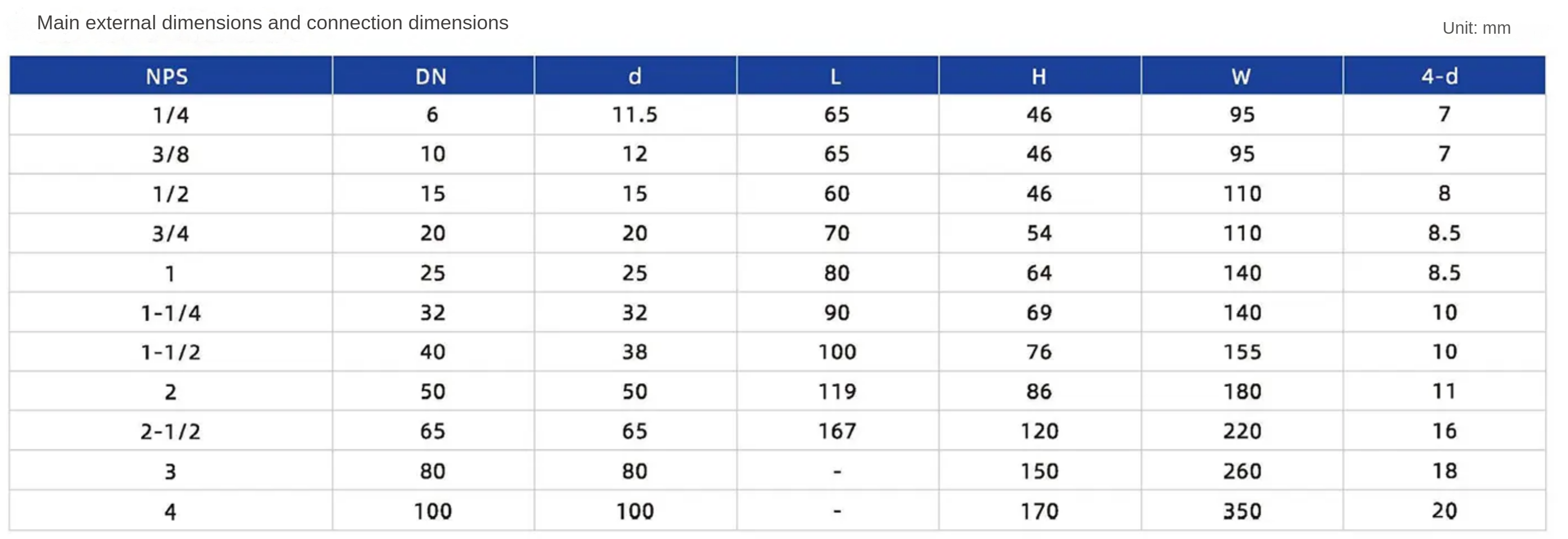
Internal female threads on both ends support customization of all mainstream global pipe thread norms, covering seven systems: BSP, BSPT, NPT, DIN, JIS, RC and G. Direct connection to international standard metal pipelines is achieved without transition adapters, significantly cutting on-site piping material and labor cost for compact skid-mounted equipment and HVAC units. The full size range spans NPS 1/4" to 3" (DN6 to DN80). Sectional drawings clearly mark all standardized dimension parameters: L stands for total length between two threaded ends, d refers to unrestricted full-port flow bore diameter, H means total vertical height of full valve assembly, W is full extended length of blue coated operating lever, and 4-d denotes hole diameter specification of four locking bolts. Mass piping layout design requires no repeated non-standard dimension verification.
Full Port Flow Channel & Operational Safety Features
The straight-through unrestricted full-port flow bore contains no throttling steps, delivering far lower fluid resistance than reduced-port economy screwed ball valves and steadily cutting long-cycle power consumption of circulation delivery pumps. A built-in anti-static conductive assembly inside the stem rapidly dissipates static charge generated by fluid friction, eliminating ignition risks on natural gas and LPG pipelines at source, a feature highly valued by gas plant contractors across southeast asia. Uniform stress distribution brought by three-section bolt locking prevents loosening and leakage of split gaskets under long-term pipeline vibration. Every finished valve undergoes dual pressure tests: 0.6MPa air tightness and 1.6MPa shell hydrostatic strength, with inspection procedures fully aligned with international valve acceptance codes GB/T13927 and API598.